


By Marija Mitrović, Director Philanthropy and Partnerships, Trag Foundation
Ever since the Milosevic regime, civil society has been seen as a threat in Serbia. It still happens today, but after 24 years in the field I can see how organizations have overcome a lot of challenges and remained committed to their communities. No one wanted them to succeed, neither then nor now, but despite this, they did. This is more than resilience. It is a huge stubbornness to help those in need.
Nowadays, I can easily say that Serbs recognize the value that organizations that may have to deal with people with disabilities or other vulnerable groups bring, where they operate. And the crises caused by the pandemic have shown people the vitality and importance of the sector. As has happened in many countries, I think organizations have been much more agile and responsive than any other system, which may have been better equipped or had more decision-making power.
But this came along with a lot of hard lessons for the civilian sector. Organizations have begun to realize how unreliable their external funding is. Donor strategies may change overnight and run out of funding for their core programmes.
This has made them show interest in mobilizing local resources, although for now they are doing so for very concrete initiatives.
Organisations in Serbia have not reached the stage where they are raising funds for their own operations. They don't even do it continuously and very few have a dedicated person who handles it.
The problem is that the situation does not seem to be improving. For local community organizations, we have become the funders because foreign donors who used to directly support small organizations have left or are planning to support organizations in other countries. Many medium- or small-level organisations face incredible obstacles because they do not have the capacity to directly address the funding schemes offered by the EU or USAID. And government funds are not reliable or predictable that an organization can devise a plan for its survival.
Organizations need to change their way of thinking, and they need to understand that once they start fundraising, this activity must become part of their structure. Fundraising is not something you do sporadically, but something to which you dedicate people and turn it into one of your priorities. Such thinking is built over time, but for an organization that has one or two employees, it is very difficult.
We've been pretty disrupted by COVID, because that's caused another huge polarization in society. First, the economic gap is now greater than it was before. Second, people are now divided between those for and against vaccines.
The COVID crisis has distracted people from a lot of issues that are still very important, such as pollution and climate change. And I feel like we've taken a step back when it comes to the well-being of our communities.
I'm optimistic when I look at the local movements, because I see that there is a wave of change starting from the local communities. Working in Serbia and the Western Balkans with initiative groups interested in creating community foundations, I can see that there is a lot of enthusiasm and a lot of people who really care about their home and community.
This is our chance to bring about a change of mindset in the community and help people not feel powerless about everything around them. Moreover, this is our opportunity to stop the brain drain taking place all over the Western Balkans.
Community foundations are an excellent response to the needs that exist at the local level and can help local businesses invest their CSR budget in significant projects. This type of organization has the knowledge that a company lacks and can ensure the development of our cities and homes.
We don't know what the future could bring us. The fact that a future accession to the EU is out of the question has demoralised a lot of people, the latest actions of our government make us wonder if our country does not adopt the Russian scenario, and the situation in the Balkans is once again volatile.
But people have a strong need to feel safe and work for their children and family. This need will fuel our local philanthropy and help us maintain and develop the civilian sector.
#cronicidefilantropie


If you don't feel like reading to the end, I leave the conclusion here:
There is no recipe for perfect communication. There is no such thing as perfect communication. There is only communication that is right for your organization's needs.
By Sînziana Wolff
I was listening in the car to an advertisement at a conference about communication and that promised that you would be able to build the perfect communication if you signed up and attended. And I started thinking about how the communication from ARC has transformed and the recipes that we've tried.
I have been working for 4 years on ARC communication, especially on what social media means. I love it and feel at ease with something a little creative, a little technical in my life. I did business as usual communication, I was good, I did my homework, I did my job, I got things going, especially since I didn't have any formal training for it. I just loved to write.
I've attended a bunch of conferences and courses on storytelling, social media, marketing, and more recently all sorts of more technical courses on ads and digital optimizations. Taken individually, none of them changed my life, but that it just added a layer of additional understanding of how I can make communication work.

I'll tell you what we think is going well with ARC communication, but before that I'm going to talk about what doesn't work. We feel like it's hard for people to associate us with all of our programs and that it's difficult to put everything we do in one sentence, that maybe we don't have the ability to tell all the stories we want, that we'd like more people in live shows, that we'd like more contacts in the database. that we want to have a wider audience.
I had to train myself to tell myself that I was OK with all of the above.
What goes well, instead, would be a combination of things, which I would divide into two types: fixed and volatile.
What's fixed is business as usual:

Then come the volatile things:
At first it's hard, I know. But it helps a lot to talk to those in your organization, without bypassing someone, because you don't know what stories are coming up. Talk to someone outside the organization, who can help you put your thoughts in order and guide you when it seems like you're not seeing the results or that you've reached a dead end.

There is no fixed recipe, but rather a few steps that you need to do "on command", that is, you fold on the communication needs of your organization. You won't get the perfect communication after a course or a conference, that's clear. But you will approach it if you treat communication as an important part of your work, which helps you carry out your mission. Communication is not only reactive, nor is it a report on something that has already happened. Communication generates responses, donors, opinions, support.
PHOTO: ARCH Archive
#cronicidefilantropie


A doctor, an entrepreneur and a journalist put their energy, time and patience to the test to change communities in the south of Romania.
By Andreea Pavel (Info Sud-Est)
Anna Burtea, Alina Pătrăhău and Alina Greavu are three women who are trying to do good. Their stories illustrate three different moments in Romania's recent history, when the difficulties faced by organizations in the good industry have changed, but never disappeared altogether. What are the shortcomings and obstacles that the three activists face on a daily basis?
Anna Burtea was among the pioneers in the good industry. At the end of 1996, in a Romania barely awakened in democracy, with serious social problems, Anna founded, together with three friends, the "Heart of a Child" Foundation in Galați, an NGO specialized in social services. They created the organization to help four street children and 25 abandoned children in a hospital in Galați, all HIV positive. They needed an NGO mainly because they felt the need to create legitimacy in front of the community they were asking for help.
"These were very difficult times from an economic point of view for most of the Romanians, and people could not conceive that someone could consume their energies to help others, as long as most of them could not help themselves", recalls Anna Burtea, one of the founders of "Heart of a Child".

The road was winding. Anna and her colleagues talked about "donations", "NGO" and "AIDS" in a country that found it difficult to listen, among so many emergencies.
Bureaucracy and lack of legislation made their job very hard. But the most difficult was with money, recalls Anna Burtea: "I had a lot of ideas, projects, desires and too little money. All the founding members were recent college graduates or somewhat more mature people, but none of us had the income that would allow us to do everything we set out to do. We even borrowed money from our parents to create the fund needed to set up the organization."
Another major obstacle was noticed shortly after the establishment of the NGO, there was no "culture of good", and the donation was equated with begging.
In addition, there was very little compassion for children with AIDS. Anna Burtea makes a resemblance to the leprosy patients of In France of the Middle Ages, who received dark clothes and a bell to be recognized from a distance and bypassed. "Well, the only difference between the leprosy patient from the Middle Ages and the AIDS patient from Romania 25 years ago was the fact that the latter did not have the coat and the bell. Romania in those years had prejudices of the Middle Ages. That's what we've struggled with."
Today, the organization takes care of over 300 children in three main areas: education, social and health. Over the 25 years since its establishment, "Heart of a Child" has cared for over 15,000 beneficiaries.
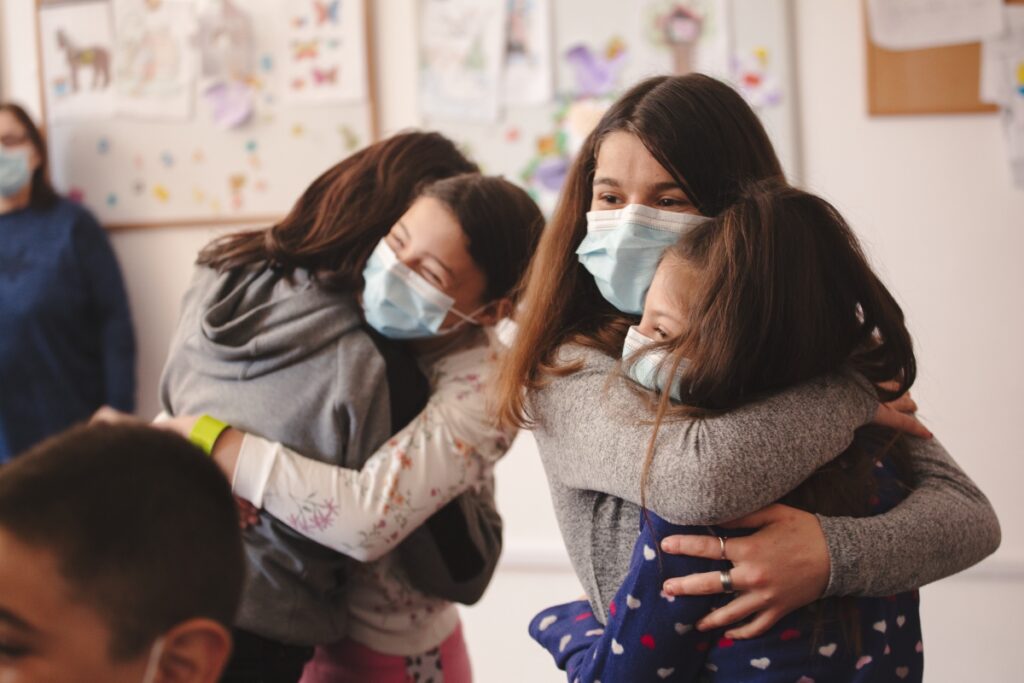
There are still big problems, but they do not compare to the challenges at the outset.
A significant problem for the organization is the lack of predictability regarding the financial resource, aggravated by the COVID-19 pandemic. This is doubled by the instability of any kind of the Romanian society, especially by the increase in utility bills. The lack of state involvement for social NGOs is just a "bonus" to all this.
You never know if in the next year you will be able to afford to do as much as before, says Anna Burtea. There are also global problems, such as the huge increase in utility costs, which will hang very heavy: the organization has activities in three offices, for which it pays rent: the Day Center in Galați, the Counseling Center in Pechea and the Recovery Center. And above all, there is the pandemic, which has made families who benefited from services even more fragile, left children with great knowledge needs and redirected donor funds to areas considered of maximum urgency, such as health. This is because the state's financial contribution to social services remains very low: in the case of the NGO it represents, public money represents less than 5% of the budget.
The founder of "Heart of a Child" believes that a first step in easing the work of an NGO would be to improve the relationship with the state, in the sense of involving it more deeply in the social programs of organizations. The "culture of donations" should be more deeply rooted in the fiber of the community, and this should also be matched by a knowledge of legislation that allows firms to help organizations without actually taking money out of company budgets. People also need to gain confidence that the amounts donated to transparent and responsible NGOs in their community are producing effects.
If all goes well, the organization aims that, by the end of 2023, its programs will have an impact in the lives of at least 1,000 children in the south-eastern part of Romania.
Alina Pătrăhău became known to the general public when she announced that the NGO she founded in 2013 will build a section for children suffering from cancer in Constanta.
Alina Pătrăhău left the business for volunteering following a grim episode for her family: her middle son was suspected of an incurable disease. The night before she found out the doctors' verdict, Alina Pătrăhău decided to dedicate her life to the children who suffer from the disease that devours the lives and hopes of many families.
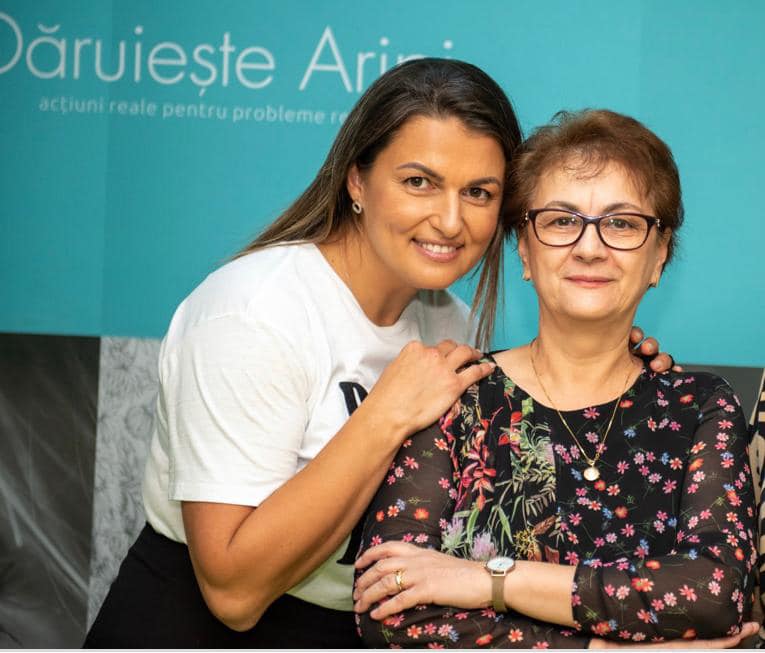
He already had experience in this area. Between 2010 and 2013 he had done voluntary work without an NGO behind him. The first case in which he got involved was that of a 2-year-old boy, whom he helped get to treatment in Germany and get well. That case gave her wings and she began to look for other situations where her support could matter. He got involved in solving more than 3,000 cases that needed help. He realized then that, through an association, things would be much better organized, and help would reach more children faster.
"With each case I realized that I have a special force that I can use to do well, a force that I used previously to run my business, with good results but not as many satisfactions," Alina recalls. Constanta founded the Association "Daruieste Aripi" in 2013.
Today, the little boy helped by her at first is 13 years old. When she talks about the "Give Wings" mission, Alina often tells two stories, equally sad at first sight. "One of them, however, is the tragic story, of lack of chances, of access to health when you need it most. We have two children: Cristina, who is 15 years old and cancer for 2 years. He lives in an isolated village in Romania, 350 kilometres from the hospital. Since she was diagnosed she no longer goes to school and has no friends. Catalin is also 15 years old, the same type of cancer. But he lives in the city, close to the hospital, goes to school and has friends with whom he has fun. Catalin is part of the 70% of children with cancer who live because they have access to timely treatment and constant monitoring. As you have realized, Cristina is one of the other 30%, those who stay away from oncology centers and do not, in fact, have a real chance at life. We are here so that more and more children with cancer or diseases that threaten their lives have access to care, monitoring and treatments", says Alina Pătrăhău.
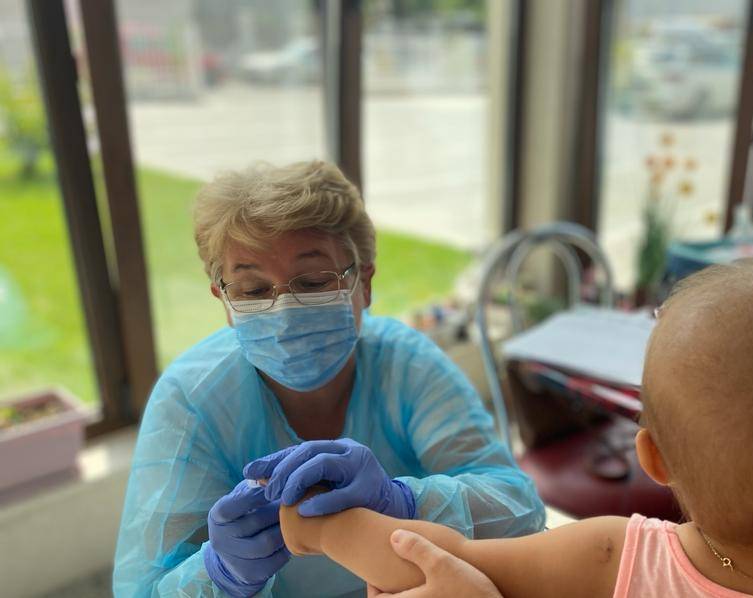
Alina Pătrăhău explains that working in a social NGO is complicated, but she is greatly relieved by the relationship with donors and volunteers, which she characterizes as "extraordinary". He explains this by the fact that the founders of "Daruieste Aripi" were themselves first donors and volunteers.
"After we started to grow, it was again complicated, because we had to look at everything from a different angle, to aim for a different impact, to always measure what we do and with what results. An audit in our NGO will be ready in December and will make it clear what is the imprint of the good we are doing. Choosing the best projects appropriate to our goals, as well as budgeting them, creating multidisciplinary teams – which involves a constant partnership with the hospitals and wards we work with – are also complicated stages."
However, the main obstacles in the projects carried out by "Daruieste Aripi" are, as in the case of the colleagues from "Heart of a Child", the lack of information and the skepticism that emerges from the bowels of the community.
As in the case of the NGO in Galați, the lack of state involvement is also felt in Constanta. In the case of "Daruieste Aripi", Alina Pătrăhău points to the lack of a national strategy, of a clear plan for the child suffering from cancer: "Until we have a vision in the approach of pediatric oncology, each of us, the NGOs that activate in the field, builds only some parts of a puzzle, but things will not work until they are assembled in a whole (...) Our dream is that all children in this country will benefit from uninterrupted treatment, monitored by the attending physician, who can reach them, if they can not reach the hospital."
Journalist Alina Greavu, now known on Instagram and Facebook with the name "Aluziva", managed to collect donations in record time, due to the very large influence she enjoys on social networks. Just two examples: two modern ambulances arrived in the courtyard of the "Grigore Alexandrescu" children's hospital in Bucharest, and a child with top school performance was able to pay her fee (which appeared after Brexit) at Oxford University, where she had been admitted to research biotechnologies that treat genetic diseases.
Recently, Alina Greavu made the decision to move from being a volunteer to creating an NGO to coordinate social actions. He made this decision because of the obstacles he faces on the logistical side, in the absence of a team and an organized framework. It will do similar actions to those before, but it will be able to organize its work better and will be more efficient":
"In addition, through an NGO I can implement projects for which to access funds or sponsorships from brands, which would help me achieve my goals much faster and help more beneficiaries," she explains.

The allusive does not know what her work will look like after being placed on the structure of an NGO, but she knows for sure that there are already enough organizations on the market, so she will have to seriously struggle for the causes she supports. He also knows that he won't have as much freedom as he does now to stop when he needs a little break, for example: "I suppose at NGOs things get a little complicated, that there are some expenses in the middle, maybe a rent of headquarters, some employees, an accountant — there are already some responsibilities that do not allow you to be so flexible. but I'll soon find out on my own skin."
Instead, Alina believes that such an organization will help her manage much more effectively the social actions she will carry out. Especially since, through it, it will have the possibility to direct the funds raised to the emergencies that may arise, instead of ad hoc mobilization on social networks:
"I am sure that it will be easier to help more cases, to develop my own campaigns through which to help in various situations and it will be easier to help a case when I know that I already have the necessary money in the NGO, than to have to struggle for a few days on Instagram to get it," she said.
PHOTO SOURCES:
#cronicidefilantropie


Through the Community Foundation Support and Development Program, the Association for Community Relations (ARC) aims to transform trust in a vehicle of change for the better. Organizations can use mini-funding to cover their own needs, from creating a funding guide to strengthening the leadership structure or using data for greater efficiency.
By George Gurescu
In 2018, ARC began working with four groups in four counties to lay the groundwork for future community foundations. Among these groups was one of about 10 people who decided they wanted to give their children a stronger county. "I do this also because I am convinced that Robert and David, my sons, want and deserve to grow up beautifully in Valcea," said one of the founding members.
A community foundation appears, on average, after a year and a half of work in the middle of the community and raising the necessary funds for the establishment, during which the initiative group works with ARC to turn its passion into a work plan.
For the valcea group, there followed 18 months in which the ARC people offered them consultancy, support, know-how and inspiration to mobilize the local community. The group has evolved, new allies have appeared, the objectives have refined, and in the summer of 2018 on the community map appeared the 17th foundation: the Vâlcea Community Foundation. "As a result of this process, we raised 110,000 lei — more than half of the funds needed to set up, and we found people who believed in us and who supported us," says the organization's team.
Community Foundations quickly took root in communities in Romania. In eight years, ten such foundations appeared, so that at the end of 2019 almost 6 out of 10 Romanians had access to their programs (there were 18 community foundations in 17 counties). They have developed, built their own trust bridges and networks of allies At the same time, the non-governmental sector has also gone through numerous changes, and philanthropic behavior has developed greatly.

Through such grants, CRAs seek to achieve two objectives. The first is to create a framework in which organizations can explore their potential, and secondly to ensure that anything well done with their heads has the potential for multiplication. A local idea attracts more people from the area, who, by example, could create a critical mass.
Every journey starts the same way, but the road is different every time. That's because ARC is trying to calibrate its tools for the needs of each community or initiative group. In the organization's view, a grant must develop the organization, not strain it. And a funding is not the reward for a well-written application, but is proof of the trust that the funder has in the team and mission of the organization.
In Iasi, the idea of a foundation appeared in the virtual environment, when the members of the initiative group united around a cause related to the renovation of historical buildings in the city. Their goal was to unite their efforts and mobilize the community around them, in order to create a real renaissance of Iasi. After 2 years of deepening the concept of community foundation and efforts to raise funds, the group managed to have together 16 people, four educational and cultural institutions, as well as a company.
Făgăraș Country had a much faster journey. In just two months, this small community managed to start with an initiative group of 24 people and mobilize half of the funds needed to set up.
How you can develop through a strategic grant
As a support organization, ARC tried to respond to the new needs of the foundations and began working with them to develop a flexible funding package to help them in their weaknesses. Thus, in 2016, grants on strategic areas appeared. Identified together with the foundations, they provided financial support and consultancy for the board and the executive director, for the development of the thinking and practices of granting funding by community foundations, strategic communication, the efficiency of management systems, business models for financial sustainability, but also for the implementation of a complex data management system (Sales Force).
In addition, CRAs put in place a learning programme for the development of funding programmes by foundations and provided scholarships to participate in relevant large events (national and international). The nearly $100,000 made available to foundations turned into 27 grants.
"It has helped us and helps us the flexibility we had and the understanding and the opportunity to change and adapt to what we really are," says Ciprian Ciocan, executive director of the Sibiu Community Foundation. A big problem in the funding environment, he adds, is the rigidity that many organizations face in their relationship with funders. "You can meet the indicators of a project and the organization dies. And I think it happens very often in the world of NGO funding, when funders insist more on formalism and the fulfilment of certain indicators," he adds.
The value of the grants was not high: the submitted projects received between 6,000 and 16,000 lei. THE ARC has seen in these mini-funding rather a way to give confidence to the organizations it funds. They would identify the areas of development themselves in order for the organization to grow in a healthy way. This increases people's motivation to get out of operational projects and look at the organization as a whole, to be creative, by testing new approaches in the community and experimenting with new tools.
For example, the Odorheiu Secuiesc Community Foundation received a grant for the development of the board and had a team of consultants by its side. The three workshops organized helped the board members to internalize and understand the roles they can have within the organization and what impact they can have in the community. "The grant helped us to have an active board. The meetings helped the members a lot to understand their role, what responsibilities they have and how they can get more involved. So, for example, together with them we decided that they should become ambassadors for the foundation's programs. Now, those who are ambassadors for the Științescu Fund are really involved in attracting new donors. Those who are ambassadors for our running event get involved in the team of runners and have also done fundraising", says Rozália Csáki, executive director of FC Odorheiu Secuiesc.
Also for the development of the board, the Community Foundations from Bacau, Cluj and Sibiu received grants. For example, the Cluj Community Foundation was at that time in the middle of an organizational crisis caused by the changes in the team (including the executive director), which put additional pressure on the board. However, with the direct support received from ARC and with the grant through which they hired an external expert, the FC Cluj board managed to take the organization to a stable area and overcome the turbulences that risked putting the organization on the stumps.
Three foundations won grants that allowed them both to progress with their own practices in the area of developing thinking and funding practices by community foundations, and to be an important source of inspiration and learning for the entire movement. Thus, the Bucharest Community Foundation has created a method that allows them to evaluate cross-programs, that is, to see what was the cumulative impact of all programs.

The team of the Sibiu Community Foundation wanted to see how it can ease the work inside the organization and how it brings added value in the relations with the other organizations. That's because the organization's goal is to develop local initiatives, not to provide a simple funding, says Ciprian Ciocan. "We do not want to leave behind some projects and some indicators, we want to leave behind some capacities, some cultural changes. We want to see some stuff that works after our funding runs out."
The Iasi Community Foundation has created a guide in which it illustrates every step in the life of a funding program, with very specific tools, case studies and practical examples: from how you design a funding program so as to make sure that all the relevant voices are present (so not only donors, but also organizations with the potential to be funded), how the related documents are created (launch of the program, forms related to the Application for Funding, selection procedures, etc.) and how you evaluate it.
For Doris Cojocariu, grantmaker FC Iasi and the author of the guide, the work she did for this product not only helped her create an institutional memory and a set of practices that support the foundation's standards, but also validate her own experience and gain confidence. "I wanted to create a textbook that would somehow complete not necessarily the history of funds, which was found in the annual reports, but effectively a kind of not exactly technical working procedure, which would also come with some appreciations of the man who went through these processes. (...) This is how I see this manual, as a grantmaking procedure, from the perspective of FC Iasi, which can be taken as a recommendation or as a source of research or documentation for other teams from other foundations", says Doris Cojocariu.
How the 14 foundations used these grants shows how diverse the organizations' visions can be and how they relate to the community. For example, the Bacau Community Foundation wanted to develop its own donor management system, to be integrated with grant management and accounting, and the Brasov Community Foundation wanted to demonstrate how a Strategic Fund in the community (on art and culture) can contribute to the financial sustainability of the organization, if it gathers a strong community around this Fund.
Seven other foundations studied the ways in which intelligent use of data can increase their efficiency, transparency, credibility, and asked for technical support and grants for the implementation of the data management system (Sales Force). "The grant received for Sales Force helped us a lot to allocate resources and time for the implementation of the system. We also brought the part of grants and scholarships that we offer on all programs and we managed to optimize the database", says Ciprian Păiuș from FC Iași.
The Timișoara Community Foundation, the youngest organization in the movement, saw in these grants a chance to strengthen its executive team, and Daniela Chesaru benefited from a grant for the development of the executive director. In other words, she chose a mentor from the move, namely Ciprian Păiuș from FC Iași. The discussions between them, for three months, helped Daniela to develop, validate or improve some of her theories and practices. Moreover, she says, Ciprian became a fulcrum, which gave her energy and courage to move forward.
"As he explained to me, he gave me confidence that I was doing things the right way. It matters a lot to have a supportive person who does that too. It's there as a personal psychologist, it's going through a difficult time in the foundation's life and also validating your work," she said.
The effect of the snowball and the spread of trust
"It may be that these funds, even if they do not help the foundation overall, will help a man in the foundation who, in turn, will help the foundation. ARC thinks of the individual and not the association, and this seems to me to be a very nice principle," says Flavia Stamate, the way arc grants work. Flavia wanted to see on what infrastructure an Art and Culture Fund (FAC) could be built. For a year, she mapped the city's resources and saw what the potential was at the donor level, because "through FAC, we wanted to be an alternative to City Hall and Council."
Although the work of exploration did not materialize in the launch of such a fund, it left a different kind of legacy. He encouraged Flavia to launch Visssual, a cultural platform and a place for independent local artists. "The grant gave me the confidence to go and talk to everyone on this cultural level at a much more applied, more professional and more technical level, to figure out what the needs are and how it can develop. Growing up in this community and growing through this grant, I'm definitely going to help the community grow. And the foundation contributed to that," says Flavia. Meanwhile, Flavia left the Foundation precisely to launch Visssual.
For ARC, the courage flavia has acquired has a huge multiplier effect. It is a transfer of power that creates a new link in the infrastructure of the good. As Ciprian Ciocan mentions, changing a behavior at the local level is much more important than achieving goals that have no impact in the community. "ARC has invested in trust and in developing skills, without putting pressure on the final result," says Laura Popeea, executive director of FC Brașov.
In 2019, CRAs continued to provide flexible grants that meet the needs of the foundations, and in this funding session it sought to support projects based on the question "What would I need to change or experiment with to achieve my goal?". In other words, ARC has helped the foundations either to overcome a barrier that blocks the evolution of the organization or to create new opportunities to advance in the thinking and practice of the organization.
Seven projects in the community were funded, and among them are the Prahova Community Foundation's plan to build a new fund to meet the needs of the county, the creation of a manual for exploring, mapping and activating the community of a neighborhood of FC Sibiu or the initiative of the Galati Community Foundation to develop its capacity and tools to better enter the role of big player for the community.
These grants have also created an example of good practice among foundations, and many of them want to create funds to provide such funding to community initiatives as well. "I want to offer these kinds of grants – general purpose, matching funds ,but it's very hard to find that kind of flexibility at the sponsor level. Sponsors want immediate results and do not understand that by investing in the health of organizations, the impact is more sustainable", says Ciprian Păiuș, executive director of FC Iasi.
This infrastructure of good had behind it other partners and allies who found their own values in arc's vision. Mott Foundation, Romanian American Foundation or CEE Trust have given ARC not only financial resources, but also the confidence that foundations are a response to the needs of communities.
Since 2008, the C.S. Mott Foundation has been a strategic donor to the movement. He helped ARC in drawing up a long-term vision and strategy and made an important and flexible contribution that allowed the organization to provide advice and technical support to foundations. The Romanian-American Foundation has contributed significantly to the consolidation of this network, as a partner and funder of the program, by providing grants for the establishment of new foundations, for the organizational needs of existing foundations and for local programs through which they aim to mobilize financial resources in the community.
Over the years, other strategic partners who have supported the development program have been Raiffeisen Bank, Trust for Civil Society in Central and Eastern Europe, Partnership Foundation or Pact Foundation.
Through every program they run, community foundations show us that we are not alone, that there are many who want to do good, but they need tools and sometimes just a kind word. This trust that people gain becomes a capital for the future of the community. "It is a very important resource that can be multiplied", adds Ciprian Ciocan. "The change it generates is the confidence that one or two individuals who choose to change something around them manage to do that. The kind of trust that is generated as a result of the success of such a project, no matter how small, remains in the community."

#cronicidefilantropie


The effort to rebuild communities shaken by decades of communism involves creating a sense of belonging and discovering their potential
When you want to help those around you turn their ideas and anger at injustices into social change, the first step is to give them confidence. And trust will set in motion all the unsuspected resources that those people have, it will help them attract others by their side and it will make them get where they want to help.
Through the Community Foundations Program, the Association for Community Relations (ARC) tries to ignite as many sparks of good as possible in Romania's cities. Since 2008, CRA has helped 19 groups set up foundations: it has given them access to flexible funding that pursues the healthy development of organizations and stimulated them to find new ways in which they can do good.
Coşteiu commune in Timiș County counts around 4,000 people, and at secondary school nr. Just over 200 children are enrolled in 282. Some of them come from vulnerable backgrounds, and in the absence of dedicated teachers or parents to support them, many of them do not integrate, have poor results in teaching and, in the end, drop out of school altogether.
"These are not kids who like the book, they just know how to beat the ball and walk outside." – Nelson Mandela
"These kids don't learn, they don't deserve it." – Nelson Mandela
"You're going to waste your time, it's not worth the effort and not the money." – Nelson Mandela
These were some of the answers that Anca Alexandru received from the people from Coșteiu when she thought to do something to make things right.
Anca arrived in Coșteiu a few years ago, after looking for a place to move with her family to escape the congestion, pollution and chaos in Timisoara. She began to know part of her new community and realized that the opportunities offered by one of the most developed counties of the country do not reach Coșteiu. "Behind us passes the highway, and Timisoara is 50 kilometers away. In half an hour you are in Timisoara, but nevertheless, to know that there are many children who have nothing to eat. Let me give you an example, there were children who didn't have teeth in their mouths at 14, and that led me to do something, no matter how afraid I am or whether the community accepts me or not," she says.
She didn't ask for money, she just told them to trust her. She was convinced that the problem of the children from Coșteiu commune was not related to the fact that the little ones "do not want", but to the entire community. "Hey, but I want to try, that in this form I don't think anyone helped them and let's see."
Anca began to research herself better about the children's situation and what she could do for them. He discovered that of the 180 students found, 50 children either did not know how to read and write or knew but did not understand. In other words, they were functionally illiterate. This is how she approached the Timișoara Community Foundation (FC Timișoara), where Daniela Chesaru, the director of the organization, helped her organize her ideas and turn them into an intervention plan. "When I met Dana, she gave me that confidence. At first, she helped me in everything, to every question I could not find the answer to, I went to her", says Anca.
75 children on the first day
Her plan took shape: a summer school for the children from Coșteiu. He talked to his parents, and gradually, the fear of rejection from the community disappeared. Anca realized that many of the students are unable to accommodate due to prejudices and insults, and the fact that teachers fail to be attentive enough to the needs of children has only made the situation worse. This is how the Initiative Group for Children's Education was born – Summer School in the village.
The idea quickly caught on. Not only in Coşteiu, but also in Timișoara. People trusted Anca, FC Timișoara offered them the legal framework to collect their donations, and the amounts received allowed her to organize her school. The local authorities were convinced of her energy and offered their support, especially with the transport of the students, and their and Anca's fears that no child would come disappeared from the first hour of the first "school day". Nearly 75 children arrived at the lessons.
In the fall, teachers saw the impact of the hours spent with the more than 30 volunteers of the initiative group. "The kids liked it. Some have learned to write or read, or even learned good manners. Something was caught in each of them," the locals of Anca told her in the autumn. She realized, however, that if she wanted to make a difference in the lives of the children, her work must continue.
Dana told him that she could only grow more if she set up an NGO. With the amount left over from the donations in 2018 and with the support of the Foundation, Anca also took this step, and in 2019 she began to raise funds through Timotion, an event where thousands of people run both for their own health and to support a social cause in Timisoara. Anca's project managed to raise almost 14,000 lei, which made it possible that — together with other donations — they had a budget double compared to the previous year, and this allowed her to come up with new programs in Coșteiu, in addition to the summer school.
The following summer he worked with 35 children, much more applied than in the first year and with care to the needs of each one. "The children know us, we know the potential of each of them, how it is with learning and what difficulty each one has", says Anca.
A first bridge to trust
"Just as the people of ARCpe have influenced me, so have I given away in my relations with NGOs and initiative groups at the local level. This is what I did with Ancuța", says Daniela Chesaru, director of the Timișoara Community Foundation.
This process of "contamination" of the good has been seen, since 2008 until today, in the communities where community foundations have been established. The philosophy is simple: you create a first bridge of trust, and over time, this bridge turns into a solid infrastructure for people who want to do good. Gradually, the infrastructures will unite and create a stable network that will generate hope for communities. For example, in the first year of its establishment (2016), FC Timișoara offered grants for 14 initiatives dedicated to the local community. A year later, the amount invested in the community doubled and 40 projects were supported, and so far, the foundation has worked with over 80 organizations or initiative groups and supported over 180 projects from them.
ARC has taken the first step in the creation of this infrastructure. In the 2000s he saw community foundations in other countries give people in those areas a sense of belonging and help them strengthen their ties and discover what they are capable of. "With every emigrant who leaves, the fiber of society is becoming weaker and weaker. A fiber that was anyway destroyed by the 50 years of communism, a regime that caused people to lose confidence in themselves, in the political class and in their own powers to change their lives for the better. Until recently, 'community' was an incomprehensible word in Romania," says Rucsandra Pop, one of the people from ARC who was with the community foundations.
But in the last ten years, every foundation that has appeared on the map has given meaning to this word. The pilot phase started in the Transylvania region, with the message "If you want to do a good, do it well", and in December 2007 and January 2008, the first two community foundations in the country were registered: Odorheiu Secuiesc and Cluj-Napoca. Today there are 19 organizations fighting to rebuild trust and give a sense of belonging.
The network of the good
These initiatives could not have arisen without the support of THE ARC's partners and allies. Mott Foundation, Romanian American Foundation or CEE Trust have provided not only financial resources, but also the confidence that foundations really are a response to the needs of communities.
Since 2008, the C.S. Mott Foundation has become a strategic donor. She helped ARC make long-term plans through an important and flexible contribution that allowed the organization to provide advice and technical support to foundations. The Romanian-American Foundation has contributed much to the consolidation of this network, as a partner and funder of the Program, through grants for the establishment of new foundations, for the needs of foundations and for local programs through which they aim to obtain financial resources from the community.
Over the years, other strategic partners who have supported the development program have been Raiffesein Bank, Trust for Civil Society in Central and Eastern Europe, Partnership Foundation or Pact Foundation.
In ten years, 16 community foundations have emerged. Every process was different, but they all needed confidence, and ARC did nothing but help them find their voice and support them to take root in the community. Thus came the flexible funding it has been offering since the beginning of this programme.
One of them is the "start-up" grant. By 2020, the Romanian legislation stipulated that the foundations had an initial patrimony of at least 100 minimum gross salaries per economy. Through its support programme, CRA provided initiative groups with half the amount needed.
Another type of aid for new foundations are general support grants (or General Purpose). It is unrestricted funding, granted not for a specific program, but for the overall functioning of the organization.
Through such funding, says Ela Bălan, ARC grantmaker, organizations can focus on the community and the long-term change they want. "Such a grant provides financial stability for 2-3 years, that is, exactly the most vulnerable period of an organization at the beginning of the road. This is the period when you form your team, strengthen your mission in the community and test various projects or approaches, and such a grant helps you focus on what you want to do, breaking out of the vicious circle of tomorrow's care," she says.
For the community foundation created by Daniela Chesaru, that grant was the "moment of respite", which eliminated "the pressure of money that I have to make anyway, quickly, to maintain the organization". The money could go to the priorities of the moment: rent, utilities, salaries or communication, and the organization could grow organically.
For Ciprian Ciocan, the executive director of the Sibiu Community Foundation, founded in 2012, the grant provided a necessary respite to be able to try and experience different ways of approaching the community. "At an organization that has a mission and activity as complex as we are, no one actually knows what that organization is going to do in the end, how it's going to position itself, what the organizational culture is going to be, what our values are going to be."
In ARC's view, grantmaking is not just a simple transfer of money, but a way to transfer power, especially "in the first years, when the world does not know you, you do not have a brand awareness, you do not have credibility, the local financiers do not trust, the NGOs do not know how you can actually support them", as Laura Popeea, director of FC Brașov, says. Through such a grant, the organization becomes the master of its own destiny and responsible for its own development, and exits the classic area of the "container" of a sum of money. It is a transfer of trust from the financier to the organization, so that both actors develop, as the relationship between them strengthens and gains balance, says Ela Bălan.
#cronicidefilantropie


Through diaspora donor circles, Romanians support causes in the country and unite communities.
200,000 Romanians leave Romania every year. Some put in their luggage photos, memories, maybe with the hope that they will return sooner than later, maybe just to stay close to home. Some take their whole family and break (almost) totally from what's going on here. And others take the Donor Circles with them.
Donor circles are a way to stay connected to the realities at home and, above all, to lend a helping hand. They function as bridges between donors and organizations, but also within that community.
The Donor Circles started in Romania in 2013, after Madalina Marcu, from the Association for Community Relations, saw the model of the event on a visit to the UK. It may seem like a regular outing with friends over a glass of wine or a very good networking opportunity. So it's not just an informal outing – at Donor Circles, participants know they can be part of the story of an NGO looking for funds to complete a project.
The format is a standard one – three organizations present their project through an ambassador, people can ask questions about the project, then the donors in the room bid donations. This is where the magic begins. Someone donates 100 lei, then someone else follows them, then the third person says he will double the donations of a fourth person. Then another donor says he will donate 300 if another 3 donate 50 each. There is a lot of laughter, any trace of tension dissipates, even though many donors come directly from work. Enough money is also being raised in a short time.
Some Donor Circles in the country already have 7 years of existence. Some of them managed to raise an enormous amount of money, such as the Donor Circle organized by Friends for Friends, where more than 18,000 euros were raised in a single evening for independent journalism projects in 2018. At the Donor Circle organized by the Brasov Community Foundation, in November 2019, the team of the Donor Circle raised 73,710 lei (of which 10% for the organization expenses) for 3 local projects.
Ioana Traistă and Cătălin Gheorghe live in Brussels. They both have a consistent history of working in non-governmental organizations in the country. Cătălin was our colleague at ARC, one of the three people who founded the organization in 2001, and Ioana worked at pact foundation, which activates communities in southern Romania. We talked about how the first Diaspora Donor Circle appeared, the one they organised in Brussels. Then, we wanted to understand why an organization in the country would get in touch with a diaspora initiative, why they would beat thousands of kilometers to get to present their cause to communities that are not directly affected by their work.
First of all, where did the first Circle for the Romanian Diaspora in Brussels come from?
The motivation of the Romanians abroad is related to the fact that they are in a community of people who want to change something. "It's important to feel that you belong to a community and that you have things in common, to share common values. And together we get to achieve our goal, that it's not about the amount, it's about the fact that together we can do this.
When you're away from home, you don't have many ways to get involved. You can volunteer, but remote volunteering only often puts additional pressure on the organization, which, if it wants not to lose you, must create a volunteer program or dedicated activities for remote volunteers. You can go once a year, twice, but more than that you can not. This is where the donation comes in, which for us is a way of civic engagement. You channel your resources to support organizations where it hurts the most, to sustainability", says Ioana.
Another option is to find an engagement mechanism that has the infrastructure ready to donate, that has already done the research work for you, that knows that an NGO is transparent, serious and that it can act to solve a problem – that is, what a circle does. And you, as a donor, come and support with confidence.
And for organizations? It means communities of donors that would have been very difficult to reach, but that you can activate more easily when the bridge of trust is already made by the circle.
"The circle brings the community together, just like in the country, but maybe it has stronger effects. We're away from home, sometimes it's hard to have contact with organizations in the country because of the distance, if you bring them here it reduces physical distance and fear of donating.
It's also the part of creating a community. There is a bubble that gathers and does things, gets involved in civic activities. We meet with them at other events as well. There are people who want to change something, to get involved. The circle brings them closer."
Joan makes a clear observation: they do philanthropy, not charity. The moment they choose an organization to invite to the Circle, they look at their ability to change systems. "On the principle we do not give oranges to children, but we do things that help them in the long run," she continues.
From here, they do not put conditions to how the money will be used inside the project – the classic percentages to cover salaries/protocol/operation that do not exceed X% of the total funding. The funding from the Circle does not put additional administrative pressure on the NGO. Organizations apply with a new project or a project they are already running and are usually from areas such as civic education, democracy, independent media, community development, minority rights. "Non sexy" philanthropy, as Joan called it, the kind of causes that do not arouse as much emotion as those of social or health, for example. From our experience at ARC, in the above fields there are several organizations that work rather on the grassroots. For them, 2,000-5,000 euros have a significant impact and, on top of that, they also have the gateway to a new audience.
Once this loophole has opened, the relationship is maintained – donors receive reports of expenses for transparency. Donors become aware of the effects of their donations – how to donate, where to donate. I mean, it's also part of philanthropic education, by the way, we don't do charity. The circle encourages organizations to build a lasting relationship with donors, cultivate it, and keep close to those who are very far from the country.
Philanthropy "non sexy"
For Cătălin Gheorghe, circles mean funding opportunities that really make the difference for the organization. It's a conscious discussion that the organisers of the Brussels circle have when it comes to selecting the causes. The organizations that come in are usually those that work on the grassroots, directly with the beneficiaries, that solve some concrete problems in a community. So far, the Brussels Donor Circle has mostly selected "non sexy" cases that work on the grassroots.
It sounds cynical to label a sexy cause or not, but it makes sense. Usually, the causes that are easiest to donate to are social, education, or health. A donor can connect emotionally more easily to the problem of "children need a hot meal at school to be able to hold on to study". Rather abstract problems, the resolution of which does not have an immediate effect, such as the lack of civic education or sex education and the effects they have on a society as a whole, are most of those that do not receive as much funding. There are those that are not necessarily considered emergencies. A lack of mass is urgent in the face of a lack of education about democracy, for example. That's not to say they're not as important to the health of a society.
Catalin tells me that the target is usually set at 2,000 euros per project, which they have successfully exceeded each time. The average amount raised thus reaches somewhere between 2,200-2,500 euros for each NGO present. The Circle in Brussels started in 2017, and at the first four editions they raised approximately 40,000 euros for 12 initiatives in Romania.
Who donates these sums to Brussels?
Usually, the 65-70 people present at the Circle are divided into 3 large categories. In the first category, donors have an attachment to the mission of the invited organization – for example, when Sex vs. Barza was present, "we had people who necessarily wanted to donate for sex education", says Catalin. Then there are the emotional donors – they impress their cause and they feel they really need to donate. It's an intrinsic need to solve a problem. And in the last group are those who donate for participation. From their experience, the first 2 groups are the most numerous and donate the most, and the 3rd group is the one made up of people who keep coming back to events.
What does a donor profile look like?
"The donor is a woman, I think she works rather in the European or associated institutions, she is about 30-40 years old, 5-8 years since she left the country. Donors are people with great attachment to Romania, but they no longer have such constant and solid direct ties to make their own donations. The fact that we propose verified causes to them helps them", says Catalin.
Diaspora Donor Circles began to emerge after the success of the one in Brussels. It is also the case of the London circle, which has so far had 2 events with some record numbers of participants – the first edition with 70 people in the hall, and at the second almost 100. We talked to Rares Pamfil, the initiator of the project in England.
How to create a community
Rares attended 4 years ago at INSPIRE, a training course for philanthropic counselors organized by ARC, where he learned more about The Funding Network (TFN), the umbrella under which all Donor Circles are organized in England. The moment came for Rares, who was looking for a long time for a method to be closer to the causes in Romania, but to allow him to have time for his job and life in London.
"I'm concerned about philanthropy. Early in my career, I studied about social entrepreneurship at university and wrote my dissertation about U.S. foundations, how they make decisions, how they measure their impact, and how they do strategic planning. I worked in the foundation of a family in London and at the Ashoka office in Washington, where I was running projects for foundations.
Seeing what culture of charitable donations exists in America and England, I said that there is a great potential to increase donations in Romania as well. Supporting NGOs in Romania, even the very small ones, is very important because for niche problems you always need a more specialized intervention, more at the grassroots level. The circle is a way for those in the diaspora to do something for Romania without changing their job, it is a good first step to do something for Romania without returning home."
After seeing the results of the circle of donors in Brussels, Rares and the team organized the London Circle, which happened simultaneously with the second event in Brussels, on June 14, 2018. The message was clear – the diaspora is a force that can work together for Romania, even if it separates thousands of kilometers.
The first London Circle of Donors gathered 70 people. It's not at all a small thing when you think that those people were brought together by 3 people, the main team of the event. Friends called friends, some friends called personalities, other friends were related to networks of Romanians in London, such as GRASP, LSRS, Romanian Cultural Institute, Rațiu Foundation. The first event started with the right and due to the proximity to TFN and the Frederick Mulder Foundation, the founder of TFN, who donated the first thousand pounds, but also with the help of donations from Romanian personalities settled in London, such as Nicolae Rațiu.
Move the needle enough to lead to a change
Circles aren't just about money. They could become a springboard for an NGO working on the grassroots, get to know more donors, get to know more donors, get to know other people who can support their work, not just financially. To move the needle not only to raise funds, but also to generate social change and fulfill its mission.
An NGO that comes to present its cause at the Circle does not only benefit from sums raised on the evening of the event. It's more of an immersion in a community that you don't have access to every day; for example, Romanians in London are familiar enough with the culture of donation and the culture of philanthropy, so the first step towards them is as done. A participating organization has the opportunity to reach the middle of a donor audience that has never heard of it before, but who is present there with an open mind to help it. You have the opportunity to arrange meetings with similar organizations in London, to try to exchange an experience with them. You can keep a connection in the future with Romanians in the diaspora who are relevant to the work you carry out. Then you have the opportunity to get a beautiful experience in London, to visit the Tate Modern, to come back with a new perspective on your work from home.
There are two very telling examples of organizations that have accomplished more than just fundraising at the circle. The first example is the Love for Life Association, founded by Raluca Ciulei. Raluca left a career as a data scientist in Switzerland to work with students and teachers from the villages on non-formal education activities. He develops course supports and activities for teachers and has made a 1,200 km march to make the problems of students in villages more visible. The organization works at the grassroots, and Raluca is the only full-time person in the association, so all the fundraising effort falls on her shoulders. After the London Circle of Donors, where she presented her cause, she raised funds and her organization received two donors who wanted to contribute financially after the event, one of them being Nicolae Rațiu, and the other even Rares.
The support then, but also after the event, meant increasing the capacity of fundraising and connecting with other networks. It was an opportunity for the organization to grow, to get a little closer to the fulfillment of the mission and to forget for a while the care of funding.
ADEPT Foundation is another example of how the intervention of the Circle can change the course of an NGO. The Foundation participated in the second edition, where it raised £3000 from donors present in the room. At the same time that ADEPT members were presenting their case on stage, they were competing for a grant of 30,000 euros for which they needed as many votes as possible from the public. After the event, the organizers of the circle sent all participants a message of thanks, but also a request – to vote for ADEPT to access the grant. From here, people voted and took the time to ask their friends to vote. In the end, ADEPT received the grant.
One thing at stake is creating a network
The success of the events also means many themes of thought for the organizers. How to scale the event? How do we link other types of networks in each country together, such as churches, schools and theaters in Romanian, which also raise funds for the country?
During this period, there is also the question of how to keep the community close in situations of major crisis, such as the one caused by Covid-19. When everyone isolates themselves for their own good, how do you bring them together? One of the answers is the creation of a formal network of Donor Circles of the Romanian diaspora groups.
"The most important opportunity brought about by Covid-19 is to answer the question: what do we want to do with the network of circles. The movement is in its infancy, but if it were clear to us how we want to work together in the future, all circles, it will be easier for us to react when a situation similar to the Covid crisis is repeated. Let's see where we go with the network because there are already 8 groups", says Ioana Traistă.
All diaspora circles consult each other, share materials and ideas in such a way that events go smoothly and their organizers do not reinvent them every time. But the purpose of the network is deeper than just coordination – it could become a means of rapid crisis response and a strategic support for organizations in the country, which they can even include in fundraising strategies.
Perhaps the most important question is how to link the network of diaspora donor circles so that their impact is felt at the level of society in the country. To move the needle, as Rares said. Diaspora circles will continue to emerge and the challenge is to find the way and goals of working together. All the organizers know each other, exchange ideas, hear each other often and send their materials and ideas from one to the other, so it's only a matter of time before we have a network in the truest sense of the word.
For organizations, circles connect them and help them access an audience that would not otherwise have direct contact with Romania. That's one of the reasons why the second London Circle of Donors took place in English – they didn't want to restrict anyone's access, they even encouraged anyone to participate.
Romanians who left the country are often an audience that seems inaccessible to NGOs in Romania, because of the distance, because of the lack of honest communication with the diaspora or because of the organization's low capacity to fundraise abroad. But diaspora is a valuable resource that we are increasingly realizing, not just in terms of fundraising. There are people with the experience of living in another country, who assimilate a foreign culture, who live personal and professional moments that, perhaps, they would not live in Romania. All these things mean an audience more aware of the power of their involvement, more responsible and, why not, with a better material situation than in the country.
For the millions of Romanians who live abroad, Circles can become a way to gather and feel a sense of familiarity. To feel at home for an evening. These events have the opportunity to succeed in things that would perhaps be more difficult to do in the country: to connect and reconnect Romanians with what they have left behind and, especially, to feel that they can offer a vital help to those left.
#cronicidefilantropie

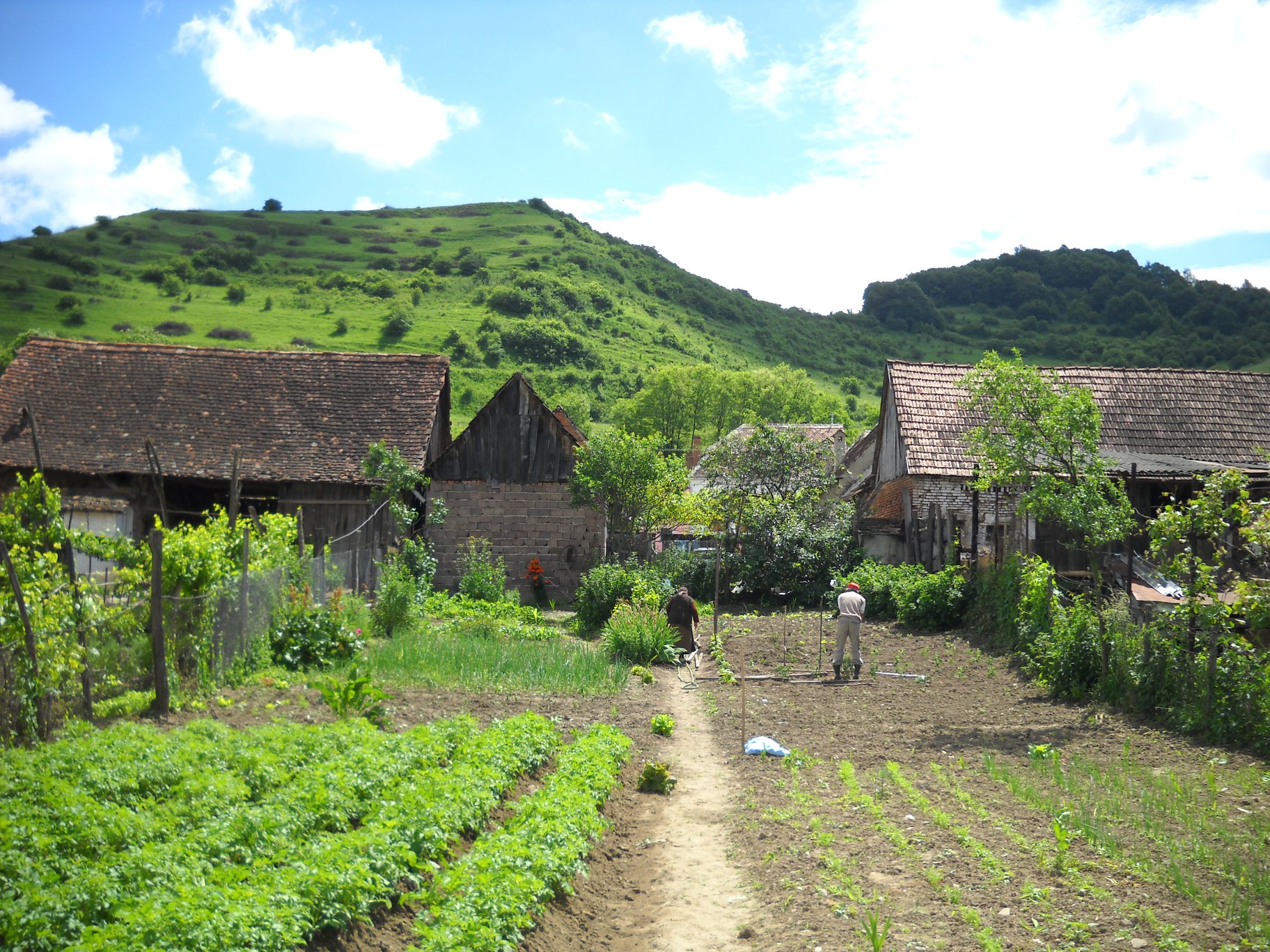
The work of many organizations has been shaken by the beginning of the pandemic. What means did they find to continue their mission?
The pandemic has shaken everyone's lives. While the need for support among communities has increased, the capacity of organizations has been limited. However, there were enough NGOs that managed to stay close to the people in the new conditions. How can you help and stay safe? It's the big question that organizations that came into direct contact with beneficiaries had to answer.
Through the #linia2 campaign initiated by the Association for Community Relations, we got to know the stories of the organizations in Romania that continued their mission after March 2020 and we had something to learn from them. We were impressed by the impulse of those who did not stop helping their fellow human beings and their ability to rethink, reorganize and adapt the programs so that their beneficiaries would receive support in these difficult times.
A year ago we started thinking about an education project that would talk about some central themes of today's world: global warming, food waste and why it is still important to recycle (to throw away the garbage produced by us separately). It is a course designed in an interactive way, which will keep the students' attention together with elements of technology, precisely because we need to speak their language as much as possible.
Before this pandemic situation began, we had all the workshops scheduled and set up by the end of the semester in June. We were able to hold the first physical workshop, until the restrictions were put in place and the schools were closed.
Immediately after the Easter holidays we started to hold online workshops, having two workshops a week with various classes from several schools in Cluj. For us it was an unexpected and welcome challenge. Because we were no longer face to face, we continued to learn through online play through various polls, games and quizzes and we discovered that students are open to such topics, but they are also your most ardent observers. For them, we always learn how to deliver them in message in the most interactive and honest way possible. We will continue with our workshops until the end of the semester as we initially established, glad that we have adapted to this situation and what this opportunity has taught us for. We love what we do and believe in the power of education done with ethics and freedom of thought.
As we well know, the HoReCa industry has been and continues to be extremely affected during this pandemic period. Restaurants have had to close their doors since the first few days of the crisis. Most of them have reinvented themselves and reoriented themselves massively towards delivery, thus continuing to meet the needs of consumers and maintain a close relationship with their clientele. As a result, our restaurant projects have also had to suspend their activity indefinitely.
However, we are also seeing a good side in this time of pandemic. It comes from the consumer, due to the constraints of this period. Having to resort to delivery services and consume restaurant food at home, he will surely keep what remains on his plate for later. We hope this will become a healthy habit for the post-pandemic period in restaurants as well.
"We were in the midst of preparations to launch BufKids, the second day care center of the Hercules Association, on the day when the state of emergency was decreed in Romania. At the end of March we were going to open the gates of the beautiful center of Buftea, which for two years we built from scratch together with our partners, Habitat for Humanity. Few things were yet to be completed in March, but essential: the connection to utilities and the completion of the selection process of the 50 young beneficiaries.
We were of course very disappointed that we could not welcome the children into what we hoped would become the second home for them. But we did not give up, despite the impediments.
After a week of natural confusion – during which we were also involved in the endowment of two hospital wards in Costesti and Bucharest – we managed to complete the social surveys by phone, talking to the children and parents. The investigations were conducted by Gabriela, social worker, flori, educational instructor, Elena, psychologist Buff Kids. 49 children are now beneficiaries of the day care center, and the waiting list is long.
The budgeted money for the center's canteen and other money raised was turned into food packages, masks and hygiene products that we distributed in the community at the gates of families in difficulty. Although deprived of adequate resources (laptops, phones), a large part of the children participated in lessons and creative activities coordinated by Flowers. At flexible hours and using their parents' phones, we were able to help the children with homework when they had major problems, and with the transition to the "state of alert", we began to meet with two children from the same family, in the courtyard of the center, for a partial assessment of the children's educational situation. In addition to the constant distribution of packages with masks and food, this is currently the main activity of the center: to see the children, one by one, outside, in very small groups (two by two) and keeping social distance."
"The main activity of our association consists in carrying out socio-educational campaigns in the disadvantaged localities of Romania, with the aim of reducing school dropout. At least four times a year, we meet with students in schools and spend with them a day full of activities, games and surprises.
The covid-19 crisis has had a very strong impact on the association's activity and on the volunteers. The biggest challenge was to adapt the profile of our socio-educational campaigns to the new safety rules and turn them into "remote" campaigns. We have cancelled the campaigns scheduled for April and June, with the promise that we will return when we can operate safely.
We consider that the current situation is a decisive factor for dropping out of school, especially in disadvantaged areas, which is why we have decided to offer, in addition to psychological, social and basic product support, technological support for children who need to continue their studies online.
The main ATTU COVID19 campaign:
– the educational direction, through which we offer SMART devices for 130 students of the General School cls I-VIII from Puiești commune, Vaslui County, in order to continue their studies and participate in online courses (we will ensure the periodic loading of prepaid cards with internet option, since the locality does not have an internet connection). We estimate that by the end of the campaign we will offer material support worth over 50,000 RON.
– the social direction, through which we aim to help monthly with basic food products between 5-10 disadvantaged families and 5 elderly people in Bucharest, beneficiaries who have been directly and drastically impacted by the COVID-19 crisis. On May 30, we reached 5 isolated elderly people and 40 people who were directly affected by the coronavirus crisis to bring them food.
The United Youth Country Association is actively donating distributive processing power through volunteer computers to support the scientific initiative Folding@Home, which prioritizes computerized research/ simulations to find a vaccine against COVID. After identifying achievable technical solutions, we implemented ATTU is Folding@HOME, by using cloud technical resources combined with the participation of ATTU volunteers who got involved and donated their own computers. (team page)
We have started a campaign to promote responsible behavior during the epidemic, carried out strictly internally. Attu volunteers gladly participated in this project and each shared an aspect of the fight against the virus, in accordance with the recommendations of the Romanian state authorities. The video can be accessed here.
We have continued the mentoring project carried out since October 2019 in collaboration with one of our strategic partners, in the family-type centers in Izvoarele and Secaria communes (Prahova County).
In this regard, a platform was created on the ATTU website (mentorat.ongattu.ro), where the beneficiaries accessed distance learning tools and received one-on-one mentoring sessions, summing up about 300 hours of tutoring for the preparation for the exam subjects (mathematics, lb. Romanian, history, geography s.a.md).
More details about the project, here."
You can read the entire series about #linia2 here. For more details about the campaign, write to us at sinziana@arcromania.ro.
#cronicidefilantropie


A return to "normalcy," in the sense we knew before the pandemic, is not possible. What does it give up and what does the good industry gain?
Beyond the momentary adaptations, imposed by the state of emergency, there remain practices, means, but also new causes. We asked several organizations about the lasting changes that have occurred in their work. So what's left after the pandemic passes?
Iuliana Meseșan, Motivation Romania Foundation:
"From the desire to stay with our beneficiaries, we designed remote support programs and befriended online meetings. Online sessions on the topics of active living and maintaining health for wheelchair users with medullary lesions will still be a good channel of communication and support for people who cannot physically reach our events. The #Motivation team, which includes independent life instructors – wheelchair users themselves, and physical therapists, will continue to #schimbevieți for the better through this type of activity as well. The MotiActiv mobile app and the wheelchair user's phone 0800 030 762, which can be called free of charge, still remain resources of advice for an independent wheelchair life."
Irina Vasilescu, On Stop:
"The pandemic has shown us the complex and terrible faces of poverty. I've always kept in mind that menstrual poverty is only a small facet of a systemic problem. However, after mobilizing last year to provide emergency support to the families we work with and learning more about their situations, it became clear that the only solution for the effective fight against poverty is to approach it on all levels: educational, social, health, economic, etc."
Silvia Boeriu, CeRe: Resource Center for Public Participation
"I think we will think several times before holding big events, with many people, indoors, when the conditions related to the pandemic will be more permissive. For example, now that we have adapted with the transformation of our biggest event – the Public Participation Awards Gala – into an itinerant event, instead of the singular event format with many guests inside, I think the preference will still remain for smaller offline events. At the same time, I think there have been increased doses of enthusiasm in the team that we have been resuming for some time to have just as many offline meetings with the people, groups and organizations we work with. What has changed is, I think, that we appreciate more than before that we can see each other offline with people and that we have not reached the point where online fully defines how we interact with each other."
Andra Munteanu, Narada:
"For us, the pandemic was an ultra-catalyst, we had to grow in a year as big as seven, so that's what we did. We doubled our community of volunteers overnight, we hired people in the team with each month that passed and most importantly, we managed to reach thousands of children and teachers, for the urgent needs in education they had. What else can an emergency unit do in education than to grow rapidly to match the number of children in whose service it exists?"
Sabina Antoci, Senior Program Manager, Vodafone Foundation:
"Looking at the post-pandemic perspective, the lessons we have integrated in the 15 months different from the dynamics in which we operate reflect:
1. Sustainability at micro level:
– care for the team and strengthening resilience in a new system of activity, hybrid (remote & office);
– we appreciate the long-term perspective in the way we manage the portfolio
organizationally, we navigate the professional plans and give priority to the actions to be taken;
– integrating innovation into the way of working as an opportunity generated by the pandemic;
– migration of part of the activity to the online environment and use of smart digital solutions to streamline and optimize processes;
2. Sustainability at societal level:
– developing and engaging in broad, proactive initiatives aimed at social inclusion, based on interactive relationships with other actors, collaboration and mutual involvement;
3. Systemic sustainability:
– engaging in a frequent and consistent dialogue with public authorities to explore
actions that solve the challenges of our communities, in the conditions of experiencing similar crises, all the more so as the pandemic has shown us how vulnerable is the system in which not only the NGO environment operates, but also the wider community;
Diana Păiuș, Bethany Social Services Foundation:
"Internally, I believe that the pandemic has streamlined certain work processes, forcing an automation and a digitalization of the work tools, along with the flexibility of the working hours and of the framework for carrying out the activity. We have noticed a positive effect in the hybrid work system at the level of the motivation of our team and the efficiency of certain activities that require concentration, for which working from home was a suitable environment. It is an effect that we want to maintain in the next period as well.
Externally, the pandemic has shown us how much the support network that an organization has in the community (volunteers, donors, partners) matters. Depending on the size, but also the quality of these relationships, an organization may or may not survive a crisis situation. Therefore, our concern for the future is to strengthen and expand this support network, investing in developing the quality of the relationship with our stakeholders, but also in evaluating and communicating the impact of our programs in the community.
Another lesson learned is related to the importance of having and activating a crisis plan in the organization and some resources allocated to it. One of our concerns this year and over the next year will be to build an emergency fund and develop a crisis response plan. to be able to respond coherently and in a similar way in the future."
Alina Burlacu, Executive Director, RBL:
"Like many other organizations, ours has also gone through a process of transformation as a result of the context generated by the pandemic. I would rather refer to what lessons we have taken in the last year and a half and how they will build on them further.
– Scenario-based operation and not rigid planning. This approach helped us to act quickly, to be more attentive to what is happening around us and to cultivate a new set of skills that would allow us to make decisions, with the information at our disposal, even in a landscape marked by a lot of uncertainty.
– Proactivity rather than reactivity and more trial and error. The pandemic has overturned old models of doing things, challenged some already trodden paths, and sometimes put us face to face with awkward questions about the meaning of things we were doing, perhaps out of inertia.
– More humane, constant and more open communication with the people in the community, team, projects, in order to understand how they feel, what they are concerned about and how we can meet them. This has also given rise to a lot of ideas about what we can do better and has also allowed us to have a filter of relevance to everything we do.
– More active integration of sponsors in the co-creation of initiatives and events that enhance each other and that generate a collaboration focused on intervening where we bring much more value, together.
– Hybrid working style, based on responsibility for the things we have assumed organizationally, while encouraging the intrapreneurical approach within the team.
– And last but not least, with the pandemic, we have staked more and will continue to do so, on the strength of the people in the community to gather ranks, to support each other and to learn from each other.
Alida Barbu, Communication and Fundraising Director of the Ornithological Society Romanian:
"Certainly, even if we return to offline events, with the public, we will also think and realize online variants of at least some parts, and the projects and educational activities will be designed with greater applicability online.
We hope to keep the approach more relaxed towards the work schedule (partly from home, at different times, etc.) and organizing meetings with the team or partners and online, reducing the time allocated.
What does not necessarily depend on us, but we would like not only to preserve, but even to amplify, is the more open relationship of the authorities towards online communication, electronically signed contracts, documents sent by mail, in some cases dedicated platforms for interaction with 'citizens'."
Anca Ciobanu, WWF Romania:
"What has changed because of the pandemic and will it remain? We work more from home. But we don't know if it's for better or for worse.
We are more visible, more in the attention of people. People have seen that nature can regenerate if you leave it alone. The pandemic made them visit Romania, they saw how beautiful our country is and they began to inquire about how to protect these areas.
We're thinking about backup plans, we've got more pressure because it's an emergency to protect the environment. On the one hand, people are more attentive to nature, but on the other hand, other social problems, education, poverty have come to the surface, but we are confident that more and more people will support more and more causes at the same time.
Even if we do not always manage to talk to potential face-to-face donors, we will invest more in our relationships with them, show them that they can be helpful and that they can trust us, whether we contact them by phone or by other means."
Daniela Chesaru, Executive Director of the Timișoara Community Foundation (FCTM):
"At first glance, the way we organized our work outside of a fixed office has changed a lot. Both within the executive team and on board and in the relationship with our beneficiaries and partners, most of the meetings we held online and so everyone worked from anywhere. We noticed that although we can return to the office that FCTM owns, most of the team, but also our beneficiaries and partners prefer to meet and still work online. In addition to the convenience of working from anywhere without wasting time on travel, another reason is that we still do not feel ready to resume work as before the pandemic, we have changed our behavior towards both the workspace and others. Now the office and the workplace is "wherever you are" and bonus, the bureaucracy and the need to necessarily have contracts and documents signed face to face has been substantially reduced compared to the time before the pandemic. We can say that we have made an important leap towards cutting red tape. It's as if we're all organizing our house outings, documents and work better so that we don't move unless there's another alternative (I think this is something that we're drawn from filling out hundreds of statements we had to make to get out of the house)."
Diana Marița, FDP Fundraising Manager Protagonists in education:
"It's been almost 1 year and a half since we changed our way of life, our interaction with people and implicitly the way we carry out our activities. We can say that the Sars COV 2 pandemic has highlighted the best in us, especially when it comes to readjustment. We learned that we can also help remotely, we learned once more to support unconditionally and we found how it was natural that technology can save us. And now, it is all technology that can make it easier for us to understand, how we can better, more effectively support children and families at risk of social exclusion.
What has been missing — and we will probably miss for a long time to come — are the events, especially the sporting ones (carried out through the Social Sports School - Real Madrid Foundation) program, which often brought together the participation of volunteers from the partner companies (over 500 volunteers who were involved in various activities with children). It is physical interaction that unites children, that makes them much more competitive and develops many skills for them.
Between us, the colleagues in the organization, however, relations have become much closer, even if physically we do not all meet at the office yet. What was extraordinary during this period was that we supported each other, that we found that inner strength that challenged us to realize that only together and patiently can we build and remain true to our mission to give good further."
Maria Culescu, M.A.M.E. Association:
"For us, the M.A.M.E. Association, the pandemic has changed the way we work with the beneficiaries, because we had to translate online some of the therapies that we carry out one to one, in the offices within the Star Center – a center for psycho-socio-medical support and recovery for sick children. More specifically, we have adapted the psychotherapy, nutrition and physical therapy services, in the online environment, in order to ensure the continuity of the recovery programs for the sick children.
We had to stop the group activities and the most important events of the organization, but we are glad that we managed to continue the projects we have in progress, and even to initiate new ones."
Andrei Chirtoc and Gabriel Solomon, Galantom:
"Beyond all the hardships and negative aspects that have pressed us both personally and professionally during the pandemic, there have also been some important good things.
It may seem paradoxical, but this period has helped us to the cohesion of the team. We used to work quite a lot remotely, but now we've been forced to work just like that. However, we mobilized to work even more dedicatedly for our projects and had many more sharing and teamwork meetings than we had before. What we want to happen next is to stay with the same team cohesion, but to move as soon as possible all back to offline, because we miss the face-to-face meetings with colleagues 😊.
Our projects, especially the Galantom.ro platform, have also grown due to the fact that they have been useful in fundraising campaigns to combat COVID. With all the enthusiasm generated by the good results of last year, we have become more aware of the need to have an internal crisis plan, which until now has not existed, but, above all, of the need to have a financial provision that allows us to keep the team and the activity in borderline situations.
Perhaps most importantly, we've learned to be even more flexible, and more available to adapt, and more aware of the impact we can have together if we stay and work together."
#cronicidefilantropie


The essential problems are not solved with funding for several months, but through the continuous support of the organizations that deal with them. And that means creating a strong foundation for NGOs: people with decent salaries, funds for consulting and much more.
I have been a grant officer* for 8 years and a project evaluator** for 11 years and I have had the opportunity to read thousands of projects submitted for funding to various funders for whom I have worked. I also had the opportunity to go through a lot of moods, seeing that some such promising projects die due to lack of funding, that some problems that NGOs in Romania deal with remain unresolved precisely because of a struggle of survival for funds, either private or public.
Most of the NGOs in Romania have taken over from the roles that the state should have – to educate children, to build hospitals and after-schools, to offer hot meals, company to the elderly, animal shelters, to protect nature and the list goes on.
Which leads me to the natural question: how do we make people who solve society's problems receive enough trust from funders, to be able to function healthily for their beneficiaries?
Let's do an exercise. Let's say I have 1 million dollars, I don't know exactly how they landed in my account (sure, if I had them for real, then I would be interested in where they come from), but now that I woke up with this money, I want to pass it on. I don't know what you guys would do with 1 million dollars, I'm going to give it to non-governmental organizations, through grants. Other funding.
First of all, I will give this funding to those who work in non-sexy and, therefore, underfunded fields – anticorruption, independent media, grassroots initiative, community development, culture, social equity, human rights. In terms of "human rights" it hurts badly, if I were to name only sexual minorities, underage mothers, post-institutionalized people, over the age of 18 or juvenile offenders.
Under no circumstances, but under no circumstances would I give these organisations funds to do projects. I would not give them the funds to stay in the vicious circle of survival, in which they hardly tinker their salaries from one project to another, and securing fixed costs is a nightmare. In addition, a project of several months does not solve any problems. It just adds one more seam.
I would give them funds to hire people with decent salaries, I would give them funds to develop their capacity in their areas of expertise, to be able to access advice or any other type of professional support they need. I would invest in a strong foundation of the organization, ensuring the current costs of operation and the development of those skills that lead to the fulfillment of the vital mission of the organization (yes, I know, it sounds pompous, but we need to increase our competence to do good).
And then I would invest in the financial resilience of the organization, first and foremost in financial management, in the management of donors and the relationship with them, in cash flow analysis and in white money for dark days; i.e. reserve funds, endowments, investments, etc. Even large organizations with many employees and many programs face such cash flow problems, or periods when they are between funding, and current, fixed costs cannot be covered. Credit is not the most accessible tools because the banks are afraid that we are not solvent enough. Or they are considered as high-risk loans and so we have heavier repayment conditions, the executive director of an organization with 20 employees told me at an event.
It is only after I have strengthened the foundation that I will look at how I, the holder of this million dollars, could invest in the impact of organizations through long-term programs and the fulfillment of its strategic objectives.
This is a pyramidal approach in which we create grantmaking tools (funding) that
they are gradually responding to the needs for stability and growth of organizations as living, dynamic, evolving bodies that you can see here as well.
The FORD Foundation, one of the longest-running and most reputable funding institutions in the world, has created a mission out of influencing other funders to invest primarily in the organization (in its health) if they want to BUILD IMPACT through their programs. This is how the BUILD program appeared: "BUILD is a 5-year funding cycle, in which $ 1 BILLION is invested in the long-term increase in the capacity and sustainability of 300 organizations around the world. The lack of flexible and reserve funds very often prevents organizations from innovating, testing new approaches, taking risks, developing their team and expertise in the long run. Our program comes to fix these shortcomings."
(Ford foundation/BUILD will clearly and simply show how they created this program and how well it works for organizations)
Why is such funding needed in Romania as well?
Because existing financing practices (and we are talking here about both public and private funds) are mostly restrictive, in the sense that they provide funds exclusively for one-off projects or the resolution of immediate problems. This helps to perpetuate a circle of poverty, preventing organizations from getting out of the fight for survival. That's why it's so important to start investing in areas vital to increase impact (vision and strategic thinking, leadership and governance, management systems), even if they don't look so attractive in a funder's annual report.
We no longer want our financiers to put activities before people and force us to have the salary expenses a certain (obviously small) percentage of the entire grant. We are very dedicated people, we are professionals, we have results and we work with vulnerable groups, but we ourselves are at the limit of burn-out and very vulnerable, because we are forced to remain employed in companies or other places in order to be able to support our families, the director of a non-governmental organization told me.
Is it possible in Romania?
More than likely! In fact, Lidl, IKEA, Kaufland, ING or Vodafone are just a few examples of creative and strategic funders, who reinvent their practices so that they are better correlated with the organizations they finance.
* researches available funding programmes (grants), writes applications for funding, ensures that funds are used in accordance with the funder's requests
** evaluates projects submitted for funding, in terms of the implementation capacity of the respective organization, impact, replicability, etc.
Ela Bălan is a grantmaker at ARC in the Community Foundations program. She has worked for many years in the field of funding for non-governmental organisations, either as part of the FDSC team during the pre-accession period to the EU or as part of various committees and project evaluation committees at international level. He likes money and NGOs, which he wants to put in a mutually beneficial relationship.
#cronicidefilantropie


The message of a fundraising campaign can now reach anywhere in the world. How do you get to the right people?
Social distancing, teleworking, online schooling. These are just a few of the new terms that we've been used to for more than a year. In the case of civil society, another term has been added: digital fundraising. Digital fundraising is a concept that refers to exploiting the opportunities provided by technology to increase the attraction of funds. And it looks like it's going to make a difference when it comes to surviving civil society in the long run.
According to networkforgood.com, "worldwide, online donations increased by 23% in 2018 (compared to 15% in 2017). And the monthly online revenues of non-profit organizations have increased by 40% as recurring donation options become increasingly popular among online donors."
51% of young people say they donated through a website, and 37% used their smartphone to donate. And since, globally, 91% of young people under 25 have a mobile phone, it seems that this is the future and we must prepare for it, the same source shows.
Platforms that can facilitate digital fundraising must be aligned with a good communication strategy and a fundraising plan established from the outset. With the help of technology, the message of the fundraising campaign can reach anywhere in the world. It can reach out to very different types of audiences: large donors, national or international, small diaspora donors or friends of theirs, a in any fundraising campaign, you have to identify what connects you to your donors, why they choose your organization, how they prefer to communicate and stay connected to the cause. There are also campaigns that have attracted funds or been promoted for fundraising message, others because they have been cool and trendy.
One campaign you've surely heard of was the famous #icebucketchallenge. The global phenomenon not only attracted $135 million in donations, but also opened up a new perspective on digital fundraising. Those who watched the video of people pouring ice water into their heads were urged to try on their skin what it means to be affected by sclerosis. Whether they donated or not, over 17 million clips were uploaded to facebook in a month. The campaign went viral because it urged people to put themselves in the shoes of those who are affected by multiple sclerosis.
There is no perfect recipe for a viral campaign
If #icebucketchallenge created a fashion, Movember created a tradition. Australians at the Movember Foundation dedicated November to raising awareness of the health problems faced by men. From the 30 people who participated in this movement in the first year, the company grew to over 1 million people in 2010. And now more than 5.5 million people in 20 countries are raising their mustache in November in solidarity.
There are many international campaigns that we can give as an example of good practice: no make-up selfie, batkid or love has no label, and much more. But there are also fundraisers from Romania who have carried out successful campaigns, putting donors / influencers in the shoes of those affected. An example is the Magic Association and their campaign for #MagicHome which raised 500,000 euros in the first 3 weeks. What was magical about this campaign, as with #icebucketchallenge, is that donors were able to experience what it means to be with your child on your hospital bed for hours on end. We introduced this campaign to the digital fundraising category because media echoes and fundraising messages were predominantly online through those who posted themselves experiencing what they felt in those moments and urged donations.
As with #icebucketchallenge or #magichome, the new trend in marketing is to use influencers to promote your campaign. Along with social influencers, non-profit organizations are increasing their visibility in the market and bringing more supporters along with the cause they represent.
More and more organizations in Romania are running digital fundraising campaigns together with marketing departments. The Regina Maria Social Innovations Foundation, Autism Voice or the Little People Association are just some of the organizations that use social media and influencers to viralize their fundraising campaigns and seem to be successful.
But do not give importance to those who tell you "leave me, I will make a viral campaign". You will hear from many marketing companies that they will help you have a campaign like never seen before. Before you believe them try to understand the strategy they propose to you and test the product that is offered to you.
Search for the right niche, the right time and the right audience
I am convinced that you have appeared in your feed articles and clips "suggested" or "sponsored", sometimes uploaded some time ago. The figures you see as the number of reactions or views are given by the sponsoring effect. And someone has invested in promoting it so that it doesn't get lost among the hundreds of posts you read every day. With well-set parameters you can see the promotion of a campaign as a fundraising message or a kind reminder for those who said they would donate when they saw the first message, but forgot.
Whatever it is, don't try to copy and report your fundraising campaign to #IceBucketChallenge or any other viral campaign. What you can do is look at them as case studies, take the most relevant information and try to integrate it into your campaign. This way, you can be sure that you'll create content that can generate actions, commitments and donations. Use these strategies and variety of messaging across campaigns and it's possible to find the right niche, timing and audience so your campaign stays in history.
The new fundraising is based on reach, constant online presence and permanent connection with the organization's donors.
#cronicidefilantropie

Every community has the resources to become a better and stronger home for the people who live in it. We, the Association for Community Relations, have the mission to discover, cultivate and use these resources to give people hope, but also a framework in which they can act.
Subscribe to the newsletter and keep up to date with the latest Chronicles of Romanian Philanthropy, with stories about altruism and love of people in the lives of those who dedicate their time and resources to produce real changes in their communities.
The data we collect (name and e-mail) is stored on platforms compliant with the legislation in force, platforms that allow us to communicate effectively with you. This data will only be used for the purposes mentioned above or in accordance with our legal obligations and will not be alienated to another entity.
If you would also like to subscribe to the ARC Newsletter to find out everything new in fundraising and receive news about events and new plans for the non-governmental environment, please select Yes in the ARC Newsletter field.


